
No products
Product successfully added to your shopping cart
There are 0 items in your cart. There is 1 item in your cart.
TABLE GAMES
- Types of games
- Accessories
- RPG
- Trading Cards
- Living Card Game (LCG)
- Trading Card Game (TCG)
- Cardfight!! Vanguard TCG
- Cyberpunk TCG
- Digimon TCG
- Dragon Ball TCG
- Final Fantasy TCG
- Flesh & Blood TCG
- Force of Will TCG
- Hololive Official Card Game
- Lorcana Disney TCG
- Magic the Gathering
- Gundam TCG
- My Hero Academia: The Card Game
- One Piece TCG
- Palworld
- Pokémon TCG
- Shadowverse Evolve
- Star Wars: Unlimited TCG
- Yu-Gi-Oh! TCG
- Vampire: The Eternal Struggle TCG
- Weiß Schwarz
- Wixoss
- Miniatures (WarGames)
- Aristeia!
- Armada
- Batman Miniatures Game
- Song of Ice and Fire
- Conquest - The Last Argument Of Kings
- DC Universe Miniature Game
- Deadzone
- Dystopian Wars
- Scenography
- Fallout: Wasteland Warfare
- Firefight
- Flames Of War
- Freebooter's Fate
- Frostgrave
- Harry Potter Miniatures Adventure Games
- Heroclix
- Infinity
- Kensei
- Kings of War
- Marvel Crisis Protocol
- Ninja All-Stars
- Pathfinder Battles
- Punkapocalyptic
- Relic Knights
- Skytear
- Starfinder Miniatures
- Star Wars: Imperial Assault
- Star Wars Legion
- Star Wars Shatterpoint
- Star Wars: X-Wing
- The Drowned Earth
- The Elder Scrolls
- The Path of the Adventurers
- The Walking Dead: All Out War
- Warlord Games
- Warmonger
- Warpath
- Wild West Exodus
- WizKids
- Wolsung
- World Of Tanks
- World War III
- Wyrd Malifaux
- Collectibles
- Manga
- SUPER DEALS!
1066 The Battle of Hastings (Spanish)
ENVÍO EN 8-10 DÍAS*
1066JuegoEsp
634438262794
By buying this product you can collect up to 4 loyalty points. Your cart will total 4 points that can be converted into a voucher of 0,40 €.
More info
In spanish:
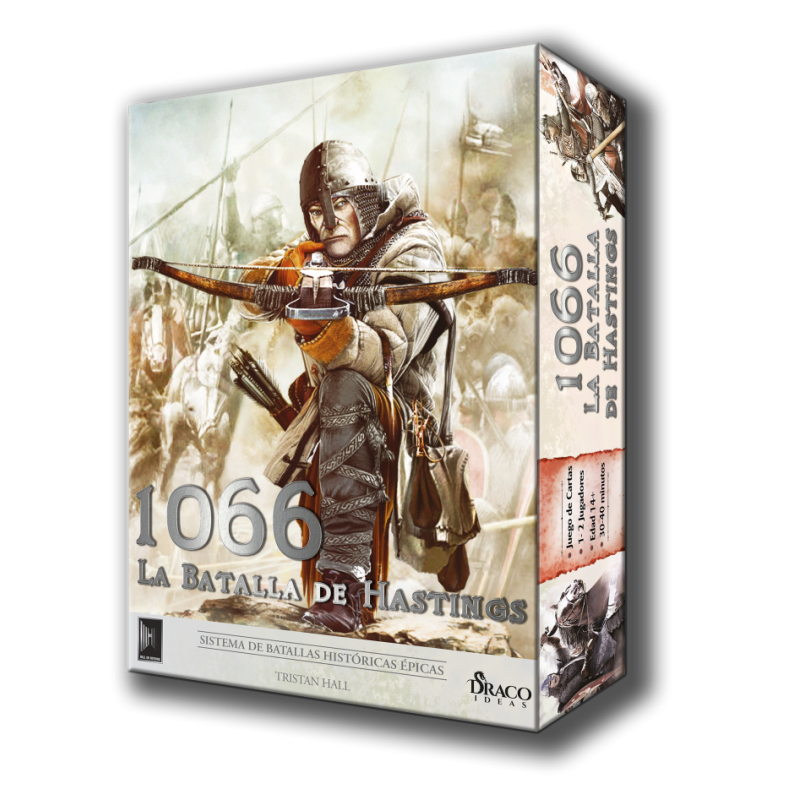
“1066, The Battle of Hastings” is an asymmetric and tactical non-collectible card game that focuses on a pivotal year in the history of England. Each player, as Norman or Saxon, must gather troops and resources to overcome the different obstacles on their way to the Battlefield of Hastings, and once they get there, face the enemy.
Based on a tactical and fast game concept, it is not necessary for the players to build their deck of cards, each player simply takes the deck of cards from his faction shuffles the deck and begins to play.
“A promise has been broken and a bad omen can be seen in the sky. A crown is at stake and history is about to be written. It is April 1066 and Harold Godwinson, King of England, is facing a deadly challenge from Duke William of Normandy. William thinks that Harold has broken his solemn oath by claiming the English crown, and this affront can only be resolved by arms, in a battle the world has never seen before…“
Characteristics
- In Spanish.
- Game for 2 players in competitive mode.
- Solo game, with book of exclusive rules and dial.
- Epic battles with 30-40 minute matches.
- For players 10 years and older.
- Can be combined with 1565 :The Siege of Malta, to generate different battles such as Normans vs. Ottomans.
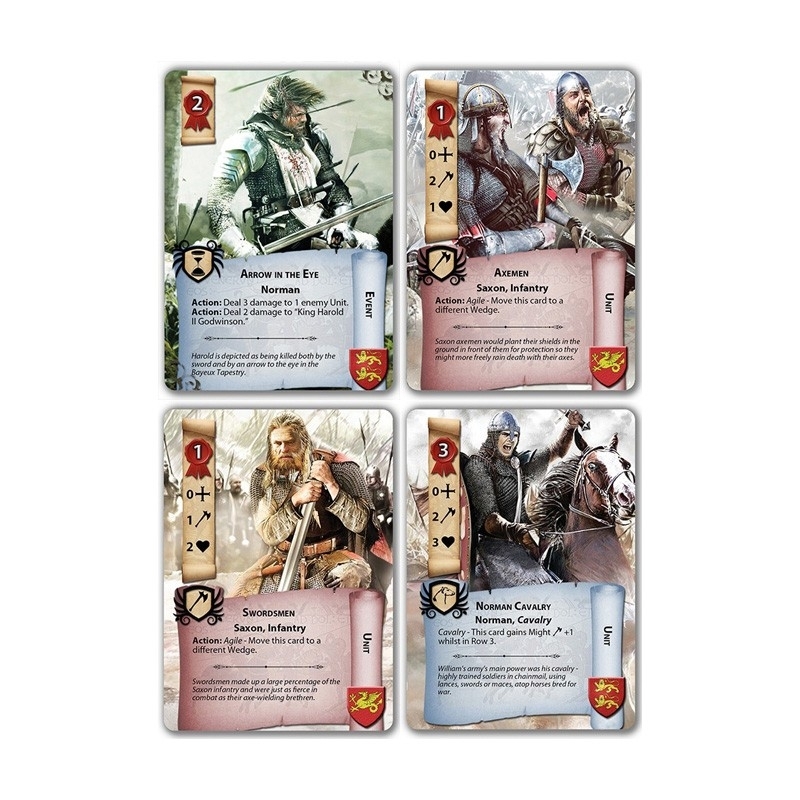
- Its components include more than 100 unique and spectacular illustrations. For illustration, all illustrations on this page are from the game.
- Over 170 cards provide excellent replayability.
- Cards with historical notes provide an immersive experience.
- Nominated for Best Game in the Print & Play of 2014 by Golden Geek.
- Nominated for best historical game of 2015 by Origin Awards.
- Nominated for best wargame of 2018 by Golden Geek.
- Nominated for Best 2 Player Game of 2018 by the Golden Geek.
Gameplay
“1066, The Battle of Hastings” is an asymmetric, tactical non-collectible card game that focuses on a pivotal year in English history. Each player, as a Norman or Saxon, must gather troops and resources to overcome the various obstacles on their way to the battlefield of Hastings, and once there, engage the enemy.
The names of the characters are taken from the Doomsday or Book of Winchester (England's main record), and each card in the game is inspired by a real person who was involved in the Battle of Hastings.
Based on a tactical and fast game concept, it is not necessary for players to build their deck of cards, each player simply takes the deck of cards of his faction, shuffles it and starts playing.
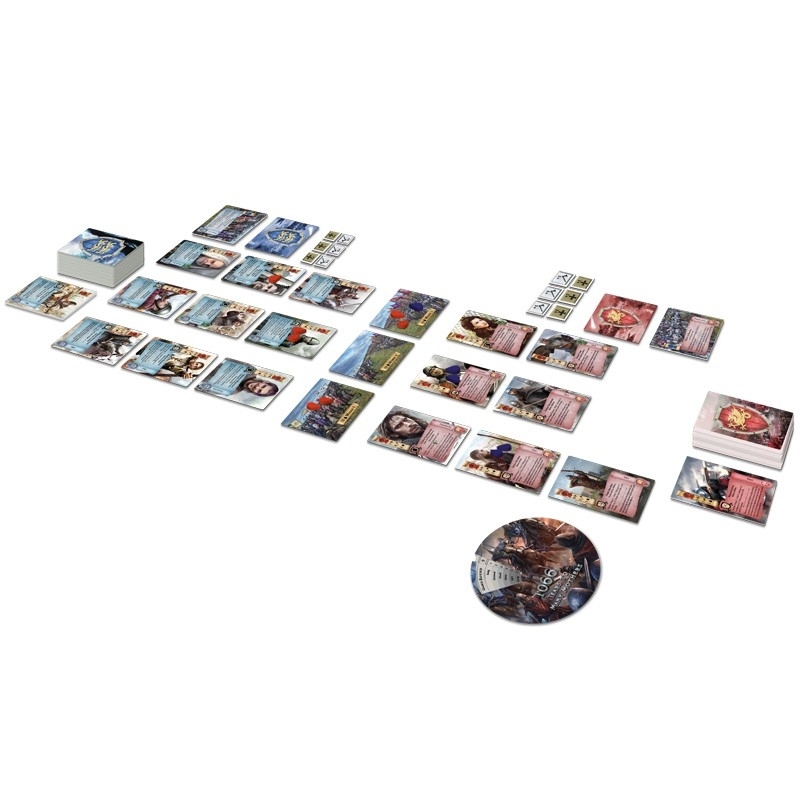
The game is played through rounds of 4 phases each in which players play their cards and build their armies by deploying unit, character, tactic or accessory cards and playing event cards. Thus, both the events and weapons, or characters that appear on the cards are based on the historical events that led to that fateful day.
The game phases are: p>
- Preparation Phase: In this phase they check if the victory conditions have been met, and draw new cards from their deck or discard excess cards in their hand.
- Deployment Phase: Players alternate performing one of the following actions: play a card, execute an action, sacrifice a card, or pass. This phase ends when both players pass.
- Front Phase: where combat takes place if the battle has started. Players compare the values of the cards they have assigned for each front and based on the result damage is assigned to each front.
- Objective Phase: This phase only takes place before the battle. Each player tries to fulfill the objective that is active at that moment.
Players have a series of objective cards that their leader must fulfill to reach his final objective that it is none other than to win the Battle of Hastings. In this way, players must first prepare for battle through character cards and units that are deployed on the battlefield. Thus, on this way to Hastings, Harold must defeat Harald III of Denmark at Stamford Bridge, while William must get the support of the Pope, before crossing the English Channel to go to England.
Once the last objective is revealed the battle begins and the player's main objectives will be to destroy the enemy units or their opponent's leader. For this, the combat takes place on a battlefield divided into 3 fronts, just like the real battle.
Each front represents the confrontation of approximately 2000 men from each side. Players will need to deal 10 damage to the enemy on a front to defeat them, which would be the equivalent of dealing 1,000-1,500 kills to their enemy. The first player who manages to defeat his opponent on 2 fronts, or who manages to kill the enemy leader will be the winner of the game.
It is possible to play alone since a regulation is included with an AI that has several levels of difficulty for the enemy player. All cards can be used in the solo game mode, even some of them have specific effects for the solo game.
Historical review
To understand this battle in detail, we have to go back to the origins of William the Conqueror with Viking ancestry, illegitimate son of Robert I Duke of Normandy. William succeeded his father as Duke of Normandy in 1035 and after consolidating his power, he began an expansionist policy, marrying Matilda of Flanders and annexing Brittany and Maine. This ambition led him to run as a pretender to the throne of England, whose King Edward the Confessor, his cousin, had no offspring.
On the Saxon side of this story we have Harold Godwin, son and successor of the Earl of Essex, and King Edward's brother-in-law as his sister Edith of Wessex was queen consort during Edward's reign. Harold won the king's support by defeating his brother Tosting in Northumbria, and the Celts in Wales, consolidating the power of the monarchy. Returning from one of his campaigns, his ship was shipwrecked accidentally arriving in Normandy. There he was taken prisoner by Guillermo, who already saw him as his main adversary to the throne. William refuses to release Harold until he gets his support to succeed Edward in England.
On Edward's death, and despite the fact that his brother-in-law Harold, William of Normandy, had been named his legitimate successor and Harald III Haardrade claim the throne of England. In William's case, arguing that the late king had promised him the crown. And that Earl Harold himself had sworn allegiance to him during his captivity.
Harold, who had been crowned King of England in January 1066, defends his right to the crown by confronting and defeating Harald of Denmark in Stamford Bridge in September 1066. After this victory, Harold II of England goes with a Saxon army of 6,000 to 8,000 men to meet William, who to make his claim to the throne effective had prepared a powerful army also between 6,000 and 8,000 men and a large fleet and had landed in the south of England in September 1066. There is some controversy regarding the number of opposing forces, although most historians move on the figures mentioned.
he Saxon army was made up of huscarls who were heavily armed elite Saxon troops (about half of their forces) and rural militia called fyrd or fyrdmen. Therefore, Harold's army was an old-style army, formed only by infantry and little specialized in a fighting method.
Unlike this, the Norman army had differentiated bodies of archers and crossbowmen, foot soldiers, and heavy cavalry. The Norman army was made up of Normans, Bretons, French and Flemish.
Finally, on October 14, 1066, on Senlac Hill a few kilometers from Hastings, both armies met. The Battle of Hastings, the longest and most decisive of the early Middle Ages in England, and its outcome, would mark the tactics and nature of medieval warfare in Europe.
While the strategy of the Saxons As Harold used his infantry to form a shield wall, William's Normans made waves of attack with archers and cavalry in order to breach the Saxon line.
Will you take part in favor of William, and with the support of the Pope will you join the crusade against the usurping Saxons?
Or will you defend the legitimacy of Harold II, expelling the invading Normans?
Customers who bought this product also bought:
-
 30,00 €
 -
 3,90 €
 -
 35,95 €
 -
 9,95 €
 -
![[7041] Card Game Sleeves (Pack of 100) 63.5X 88 MM (Green)](https://www.turolgames.com/54752-home_default/-7041-card-game-sleeves-pack-of-100-635x-88-mm-green.jpg) 2,95 €
2,95 €
30 other products in the same category:
-

Boss...
38,25 € -15% 45,00 €
-

El Valle de...
30,60 € -15% 36,00 €
-

Railway...
44,20 € -15% 52,00 €
-

Horror en...
114,74 € -15% 134,99 €
-

Horror en...
29,74 € -15% 34,99 €
-

Horror en...
50,99 € -15% 59,99 €
-

Horror en...
38,24 € -15% 44,99 €
-

El Taller...
25,00 €
-
Ambar...
27,95 €
-
Coffee Rush...
29,74 € -15% 34,99 €
-
Yonder...
59,46 € -15% 69,95 €
-

Medium: La...
16,96 € -15% 19,95 €
-
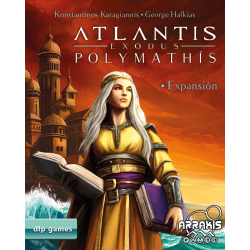
Atlantis...
9,99 €
-
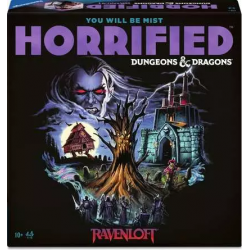
Horrified:...
42,99 €
-
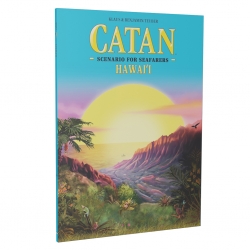
Catan...
21,99 €
-
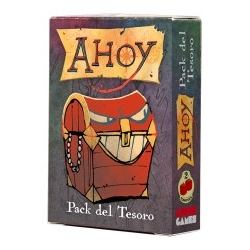
Ahoy Pack...
11,05 € -15% 13,00 €
-
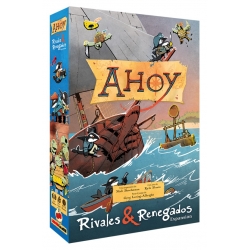
Ahoy:...
21,25 € -15% 25,00 €
-
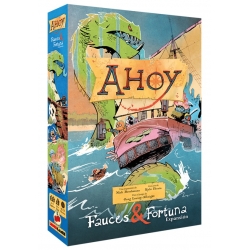
Ahoy:...
21,25 € -15% 25,00 €
-
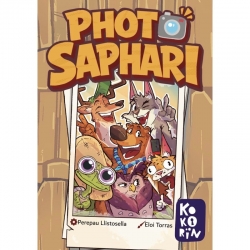
Photosaphar...
12,75 € -15% 15,00 €
-
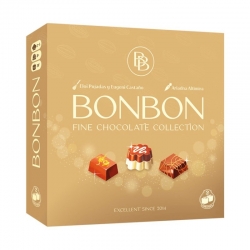
Bonbon...
23,80 € -15% 28,00 €
-
Karak 2:...
17,00 € -15% 20,00 €
-
Clásicos...
4,21 € -15% 4,95 €
-
Clásicos...
4,95 €
-
Clásicos...
4,95 €
-
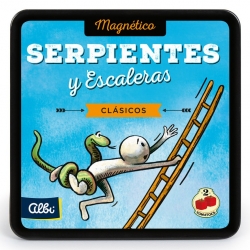
Clásicos...
4,95 €
-
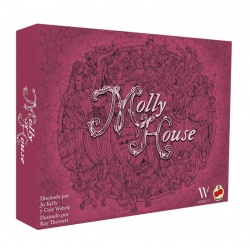
Molly House...
68,00 € -15% 80,00 €
-
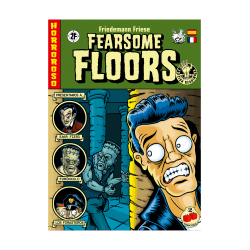
Fearsome...
37,95 €
-
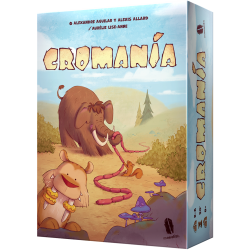
Cromania...
16,99 € -15% 19,99 €
-

Eres Tu...
24,95 €
-
Kluster...
27,00 €
